Introduction
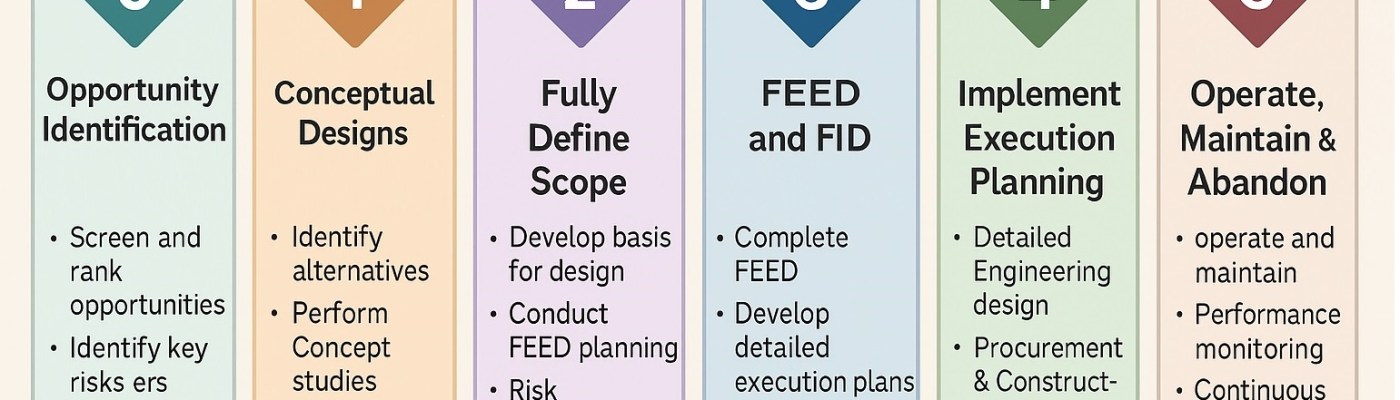
It is generally agreed the five stages of project life cycle in project management, show here in the figure 1. This caters for generic and academic purposes as a definition of project management. Although this perception was not always the case; it became apparent for complex projects prior to the 1990s that it was limited to generic projects.
See also:
- WBS – The Best Approach to Summarising Projects of any Size
- Coordinating VS Substantive Manager
- Disrespect of a Leader – Project Management
- A Story About Project Management Standards is the PMBOK 7th Edition
Decision Gates
In several complex projects, the duration of the Planning phase alone could far outnumber in multiples the Execution & Monitoring/Control phases combined. For other scenarios, the closure phase must include the operation period due to the sensitivity of the industry.
Stage-Gates was first formalised in the 1980s by Dr Robert G. Cooper. It was a more expanded and formalised way to describe project life-cycle for complex projects. The practical nature of this Phase-Gate system ensured that clear objectives for decision making were set forth and met as a prerequisite to entering other stage activities. This proved its worth in the complex and capital-intensive industries like oil & gas, petrochemicals, mining and infrastructure.
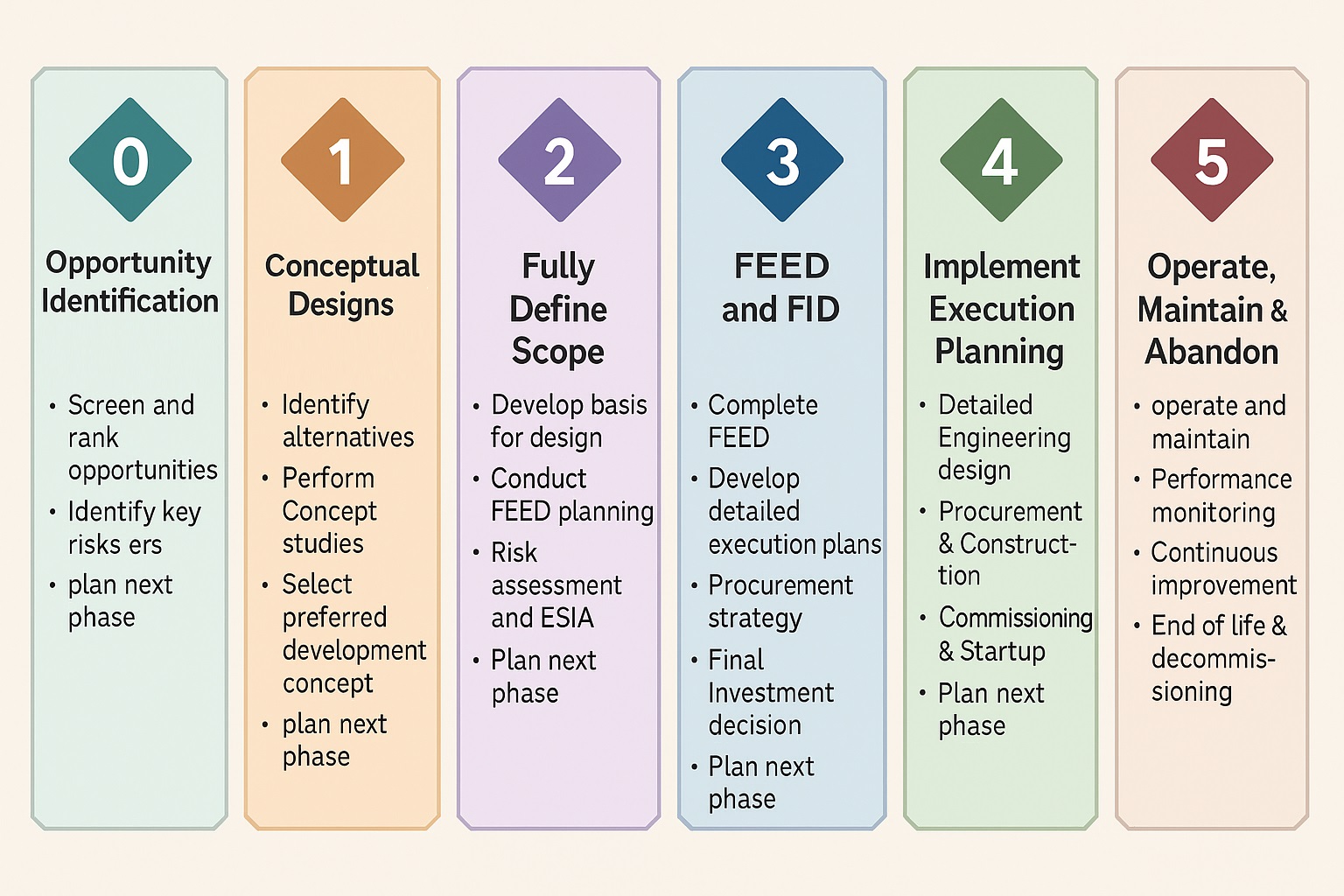
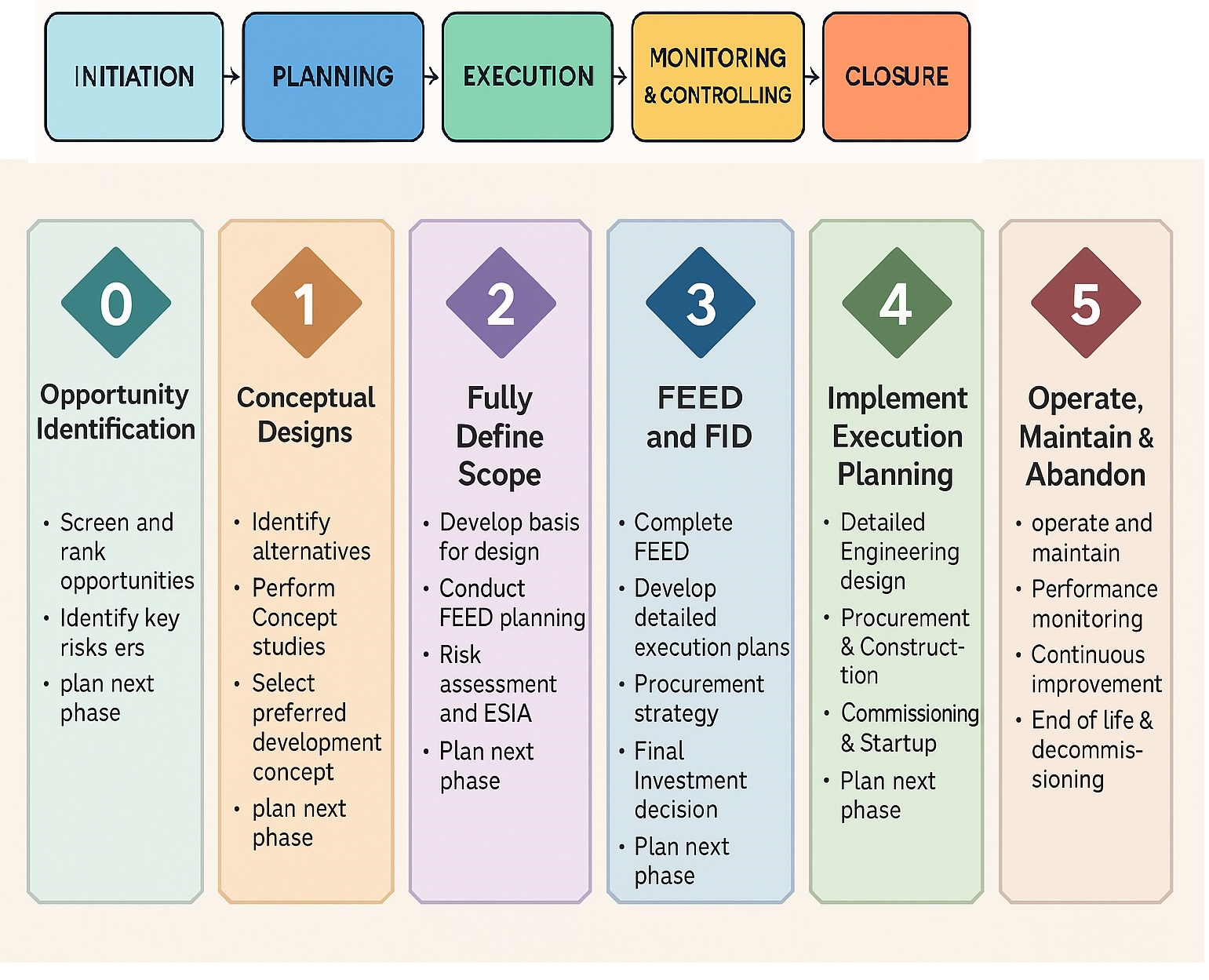
In subsequent years, oil & energy majors began experimenting with the system approach to phasing projects. Stage-gates was adopted, adapted, improved and it later birthed the Decision Gate framework. Here is an info-graphic of decision gates for complex projects. See reference below for a comprehensive Decision Gate info-graphic by a major company. The main difference between a regular project phases from project management standards and Decision Gates is that the regular project management phases focus on project life cycle: from cradle to commissioning, while the latter focuses on project life-cycle: from cradle to commissioning, operation and decommissioning i.e, from cradle to grave. The usual project phase stops at Decision Gate 4.
Reference
- Proceedings of Government/Industry Forum – The Owner’s Role in Project Management and Preproject Planning, Page 26.
 Catchment of Resources